

What Happens Before the Pour: How Ready-Mix Concrete Is Prepared for Job Site Precision
February 2, 2026
Concrete performance is determined well before the first truck reaches the site. While the pour is the most visible phase, precision is established earlier through tightly controlled production and planning steps. Ready-mix concrete is engineered to meet exact job requirements, balancing material selection, batching accuracy, and delivery timing. Each of these decisions shapes how the concrete behaves once placement begins.
Project Requirements Set the Mix Design in Motion
Ready-mix preparation starts with a clear understanding of project conditions. Structural demands, placement methods, exposure environments, and finish expectations all influence the mix design from the outset. These inputs guide cement content, aggregate sizing, water ratios, and admixture selection to ensure the concrete aligns with both design intent and job site realities.
As those variables come together, the mix is calibrated to behave consistently under expected conditions. Temperature ranges, placement schedules, and curing timelines are considered early to avoid last-minute adjustments in the field. This planning phase ensures the concrete arrives ready to place, not requiring correction on site.
Aggregate Selection Shapes Consistency and Strength
Aggregates make up the majority of ready-mix concrete and play a defining role in its performance. Prior to batching, aggregate sources are evaluated for gradation, cleanliness, and durability to support uniform particle packing. Proper grading improves internal stability while maintaining workable placement characteristics.
Moisture conditions are monitored continuously as well. Surface moisture within aggregate stockpiles directly affects effective water content, requiring precise adjustments during batching. Managing these variables protects the target water cement ratio and supports consistent strength development from load to load.
Precision Batching Brings the Mix to Life
Once materials are approved, batching converts the mix design into a consistent product. Cement, aggregates, water, and admixtures are measured by weight using automated systems built for repeatability. This process minimizes variation and ensures each component enters the mix in the correct proportion.
Material sequencing also matters. The order and timing of material introduction influence coating efficiency and hydration behavior. Controlled batching sequences help maintain uniformity throughout the load, supporting predictable placement and finishing at the job site.
Admixtures Fine-Tune Performance Before Delivery
Admixtures allow ready-mix concrete to be adjusted for specific job demands without compromising mix integrity. Water reducers improve flow while preserving strength, and air-entraining agents support durability in freeze-thaw environments. Set control admixtures help align placement windows with weather conditions and construction schedules.
These materials are carefully dosed during batching to maintain consistency across deliveries. Their purpose is refinement, not correction. By addressing performance requirements before transport begins, the concrete arrives prepared for placement without relying on field modifications.
Quality Control Confirms Readiness
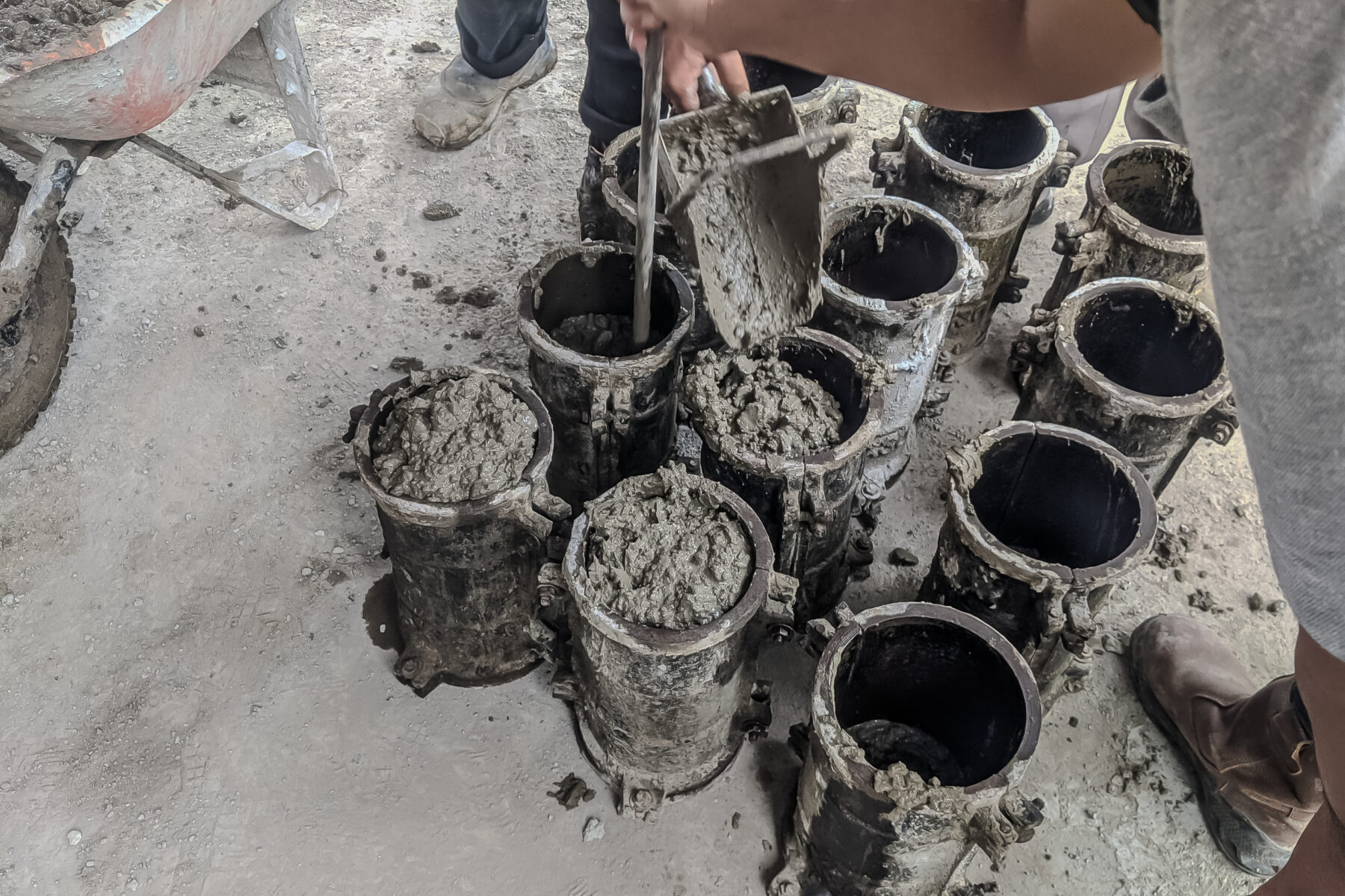
Before dispatch, quality control measures verify that the concrete meets specification. Slump, temperature, and visual consistency checks provide early confirmation that the mix is behaving as intended. These checkpoints ensure the product leaving the plant is ready for immediate placement.
Data collected during production supports ongoing refinement. Feedback from testing informs future mix adjustments, reinforcing reliability across projects. This continuous oversight strengthens confidence in every load delivered.
Logistics Align Timing With Performance
Production accuracy must be matched with coordinated delivery. Dispatch planning accounts for haul distance, traffic conditions, and placement sequencing to protect workability upon arrival. Truck mixing maintains uniformity during transport, preserving the characteristics established during batching.
When timing and material behavior align, job site operations remain efficient. Concrete arrives within its designed placement window, allowing crews to focus on execution. Preparation and logistics work together to support a controlled pour.
Ready-mix concrete reflects a process defined by planning, control, and coordination. Each step before the pour contributes to predictable placement and long-term performance. Mix design, aggregate management, batching accuracy, and delivery timing form a connected system rather than isolated tasks. Projects that demand precision benefit from suppliers who manage this process with consistency and discipline. When preparation is handled with intent, every pour begins on solid footing and finishes with results built to endure.