

How to Pour a Concrete Foundation for a Backyard Greenhouse
March 2, 2026
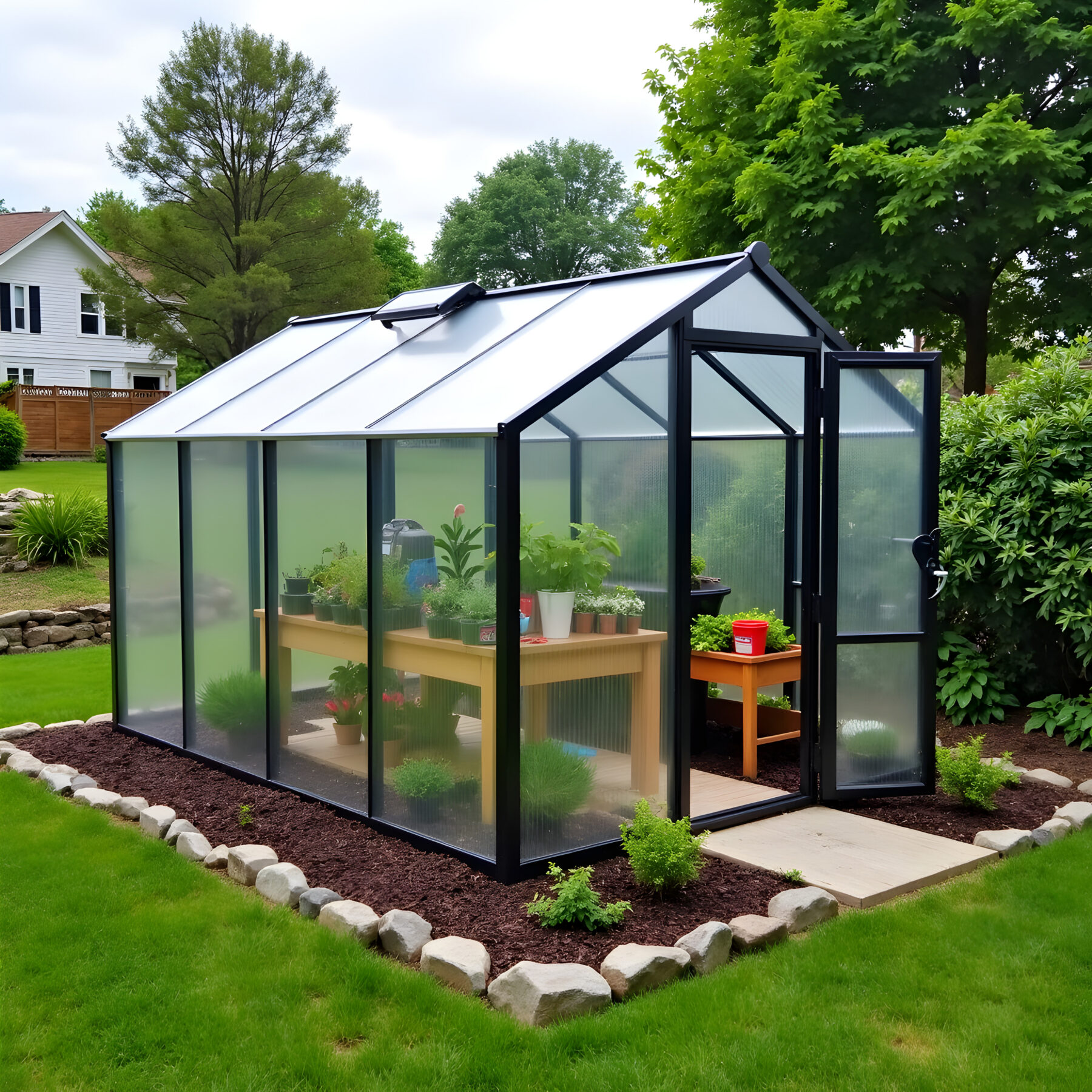
Most greenhouse foundations fail because builders treat them like sidewalks. But a greenhouse isn’t a sidewalk. Wind uplift, moisture from constant watering, and point loads from anchored framing create forces that a 4-inch residential slab wasn’t designed to handle. That pressure concentrates at corners, along edges, and around anchor points where movement shows up first. Moisture trapped below the slab and temperature swings across seasons compound those forces, making foundation preparation a defining factor in how the structure performs once installed. A properly poured slab establishes alignment, limits movement, and creates a stable plane that supports both structure and growing systems.
Ground Conditions Shape Slab Behavior
Soil compresses and expands in response to load and moisture, and that behavior transfers directly into the concrete above. Excavation should reach undisturbed ground rather than loose fill or organic material that continues to settle after placement. Mechanical compaction reduces voids within the soil structure, limiting vertical movement once weight from framing and glazing is applied.
A crushed stone base with consistent particle size spreads loads evenly and creates a drainage layer beneath the slab. Water moving laterally through the base avoids pressure buildup under the concrete, which reduces edge curling and surface cracking. When moisture cannot pool beneath the slab, corners remain stable and joint edges stay tight as seasons change.
Formwork Controls Elevation and Alignment
Forms establish the slab’s final shape and elevation, which directly affects how greenhouse components fit together. Bowed or uneven forms introduce slope changes that complicate framing alignment and door operation. Rigid formwork, properly staked, resists outward pressure during placement and keeps edges straight once concrete fills the cavity.
Elevation planning also affects water management around the structure. A slab set slightly above surrounding grade sheds surface runoff rather than collecting it against framing connections. This separation keeps base plates and anchor hardware from constant exposure, reducing corrosion and movement at connection points.
Reinforcement Guides Movement
Concrete shrinks as moisture leaves the mix and responds to temperature changes long after placement. Reinforcement limits how that movement concentrates by distributing stress across the slab rather than allowing cracks to open freely. Welded wire mesh or rebar placed at the correct depth intercepts tensile forces that develop as the slab cures and cools.
Edges deserve particular attention. Greenhouse walls transfer load directly to perimeter areas, where cracking often starts if reinforcement is inadequate. Properly positioned steel keeps cracks narrow and prevents edge separation that can loosen anchor bolts or distort wall alignment.
Ready-Mix Placement Brings Consistency
Uniform material behavior matters when placing a single continuous slab. Ready-mix concrete arrives with controlled proportions and consistent moisture content, which leads to even hydration throughout the slab. That consistency reduces variations in set time and limits weak zones that respond differently under load.
Placement should progress steadily to avoid cold joints that interrupt load paths. Depositing concrete close to its final position and consolidating it thoroughly removes trapped air and fills the formwork completely. Dense internal structure supports framing loads evenly and reduces the risk of surface scaling once the slab is exposed to water and soil contact.
Finishing Focuses on Function
Surface finishing influences how the slab performs in daily use. A smooth but lightly textured surface supports cleaning while maintaining traction in wet conditions common to greenhouse interiors. Excessive troweling draws water and cement paste upward, weakening the surface layer and increasing the chance of dusting or shallow cracking.
Control joints establish intentional planes where shrinkage movement occurs. Joint spacing based on slab dimensions and thickness directs cracking into straight, predictable lines. When joints are placed correctly, surrounding surfaces remain intact and usable without random cracking that disrupts benches or rolling equipment.
Curing Stabilizes the Surface
Hydration continues after the surface appears firm. Rapid moisture loss interrupts cement bonding, leaving the top layer vulnerable to cracking and abrasion. Maintaining surface moisture through curing compounds or protective coverings supports uniform hydration during the early curing period.
Temperature influences this process as well. Cold conditions slow hydration, while high heat accelerates surface drying before internal moisture equalizes. Managing exposure during the first several days limits surface defects and produces a slab that carries load without premature wear at high-traffic points.
Anchoring Transfers Load Correctly
Anchor bolts or embedded hardware should be set while the concrete remains workable to ensure accurate positioning. Proper alignment allows greenhouse frames to sit square and plumb, preventing uneven load transfer into the slab. Misplaced anchors introduce stress into framing members, which often shows up as racking under wind pressure.
When anchors align with reinforcement and slab geometry, loads distribute evenly across the foundation. Wall systems resist uplift and lateral movement without relying on corrective measures that strain fasteners or distort frames.
A Foundation That Supports Daily Use
Among many things, a greenhouse foundation relies on controlled material behavior at its core. Soil preparation, reinforcement placement, concrete consistency, and curing conditions all influence how the slab responds to moisture, load, and temperature cycles. Each step contributes to a surface that stays level, keeps anchors secure, and resists cracking where structural connections concentrate stress.
A well-executed pour establishes a stable platform that supports framing accuracy, protects hardware, and maintains interior usability season after season. When the slab functions as intended, the greenhouse above it operates smoothly, with fewer adjustments required long after installation is complete.