

How to Maintain Gravel Driveways and Access Roads During Dry Conditions
June 1, 2026
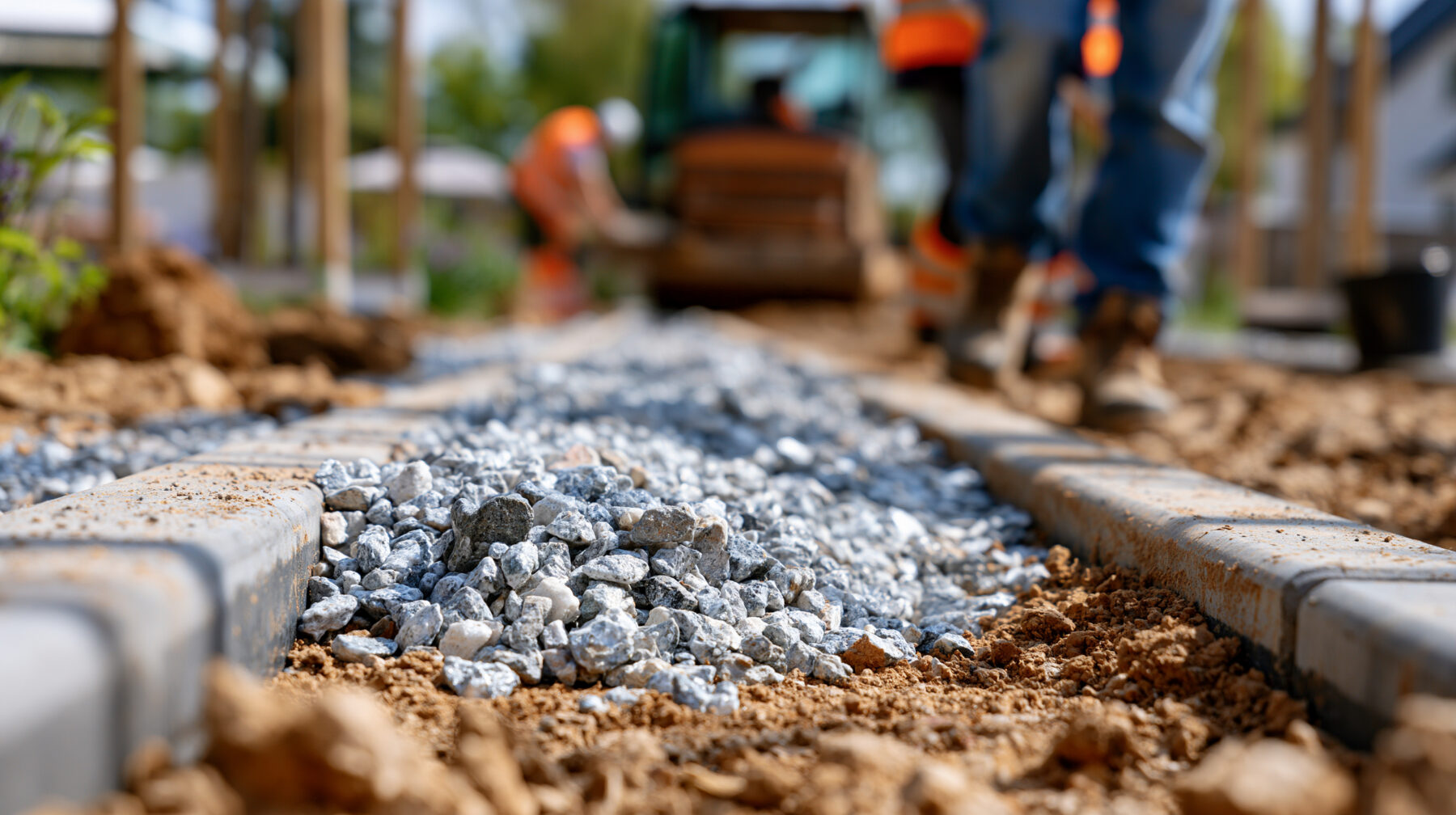
Heat and prolonged sun pull moisture out of every layer of a gravel surface, loosening the fine particles that help bind the wearing course together. Once those fines dry out and lift off as dust, the larger crushed stone begins to lose its interlock, and washboard ripples and shallow ruts start forming under regular traffic. A maintenance plan built around the realities of dry-season driveway wear helps keep the surface stable, preserves the crown, and improves drainage when storms return.
What Dry Weather Does to a Gravel Surface
Moisture is the silent binder inside any compacted aggregate roadway. When relative humidity drops and surface temperatures climb, the clay and stone-dust fines sitting between the larger crushed stone shrink and release, drifting up behind every vehicle. Loss of those fines breaks the interlock between the larger particles and exposes the wearing course to faster surface ravel.
Loaded traffic accelerates the issue. Each pass of a pickup, ATV, delivery truck, or trailer applies a downward then forward shear that grinds the loose stone into ripples and pushes material toward the shoulders. Without intervention, the crown flattens and the surface trends into ruts that handle water poorly once a storm finally rolls through.
Restore the Crown and Profile First
Crown geometry sits at the center of any dry-season repair on a gravel road. A box blade or grader pulled across the surface at a slight angle redistributes displaced material back toward the centerline and rebuilds a two to four percent slope from middle to edge. That crown is what moves rainwater off the surface and into the ditch line instead of letting it pond and soak the base.
Loose stone needs to come toward the center first, then return outward in a single uniform pass. Skip this step and fresh aggregate placed on top will simply migrate back to the shoulders. Profile geometry sets up everything the wearing course does afterward.
Replenish Fines and Top Stone
A fresh lift of well-graded crushed stone replaces what the dry weather pulled out. Dense-graded aggregate, sometimes called road base or crusher run, carries a mix of stone sizes from roughly an inch down through dust. The smaller particles fill voids between the larger pieces, and the dust acts as the natural binder that holds the matrix together under traffic.
Single-size washed stone rolls under tire load and never knits into a stable surface. A graded blend, placed at one to two inches across the wearing course and lightly moistened, locks into the existing base and reestablishes the dense matrix that handles loaded equipment.
Manage Dust Without Drowning the Surface
Calcium chloride and magnesium chloride are the two field-proven additives for holding moisture in a gravel surface through summer. Both pull humidity from the air and keep the fines damp enough to stay in place under traffic, which limits dust plumes and slows surface ravel. Application rates vary by climate and traffic count, and the surface should be lightly moist at the time of spread.
A water truck or garden hose, run in short passes, works well on shorter driveways and lower-traffic access roads between chemical treatments. Heavy watering, by contrast, saturates the base and loosens the very interlock that recent grading restored. Short, frequent passes keep the top half inch damp without softening the structure underneath.
Compact and Watch the Edges
Compaction with a smooth-drum roller or even a loaded pickup driven in overlapping passes finishes the work. Traffic itself continues that compaction once the road reopens, but a deliberate first pass sets the matrix before random tire patterns start displacing material again.
Edge erosion is the dry-season blind spot. Shoulders bake hard, then crumble inward the first time a heavy vehicle drifts off the wheel path. A pass with a rake or grader along each shoulder, tucking loose stone back into the running surface, holds the working width through the rest of the season.
Summer conditions across Northwest Arkansas put real demand on gravel surfaces, and a well-graded aggregate placed at the right interval keeps them holding through the season.
For dense-graded crushed stone or dust control material sized to driveway and access road work, the team at Standard Materials Group is ready to plan the next maintenance pass.