

What Makes Concrete Durable Enough for Public Infrastructure Projects?
November 1, 2026
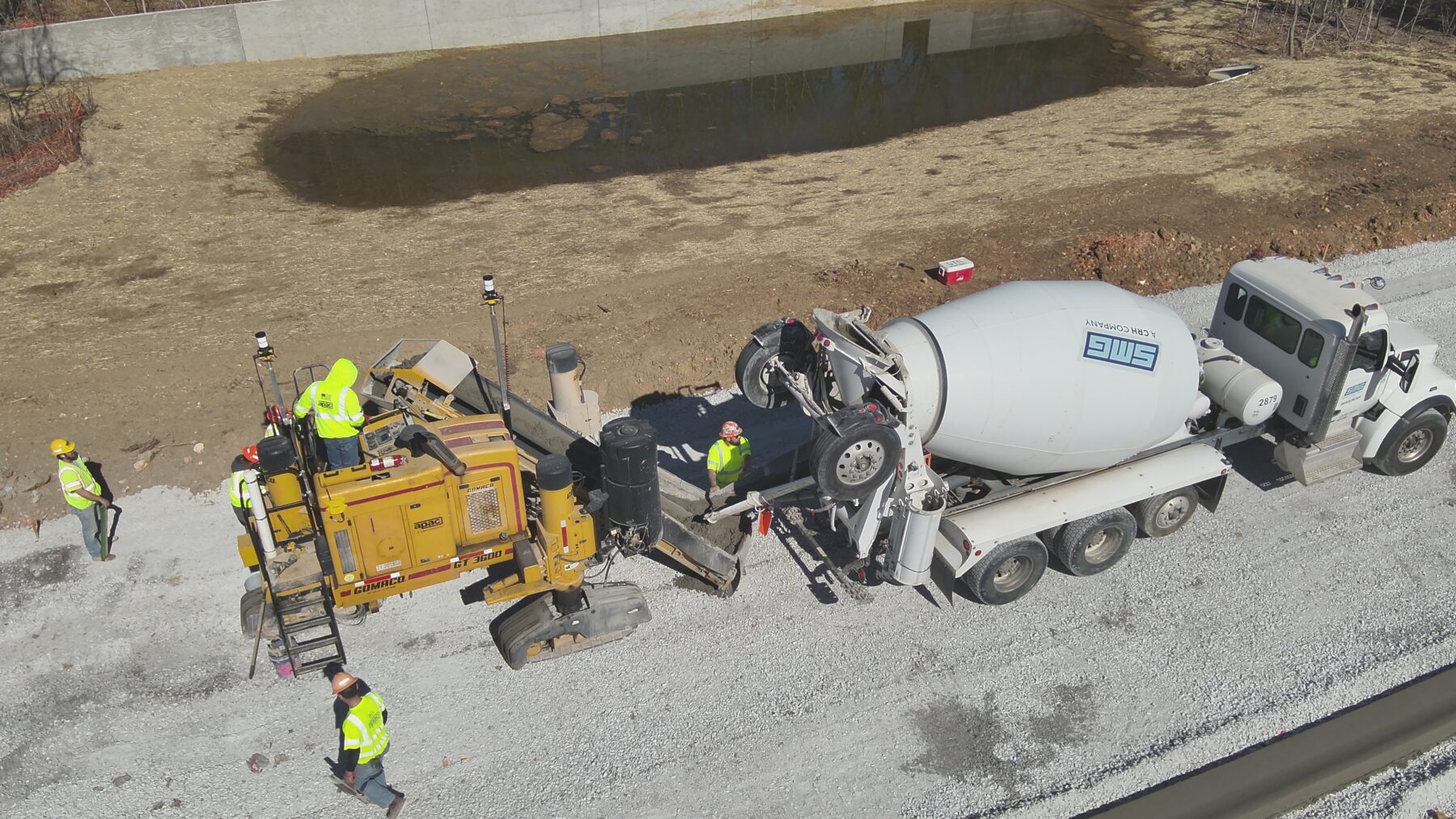
Concrete used in public infrastructure has to do more than reach its design strength. It must resist moisture intrusion, freeze-thaw cycling, deicing salts, and long-term chemical reactions that can damage the paste or corrode reinforcing steel. That durability starts with a low-permeability mix design and depends on proper placement and curing in the field.
What Does Durable Concrete Have to Resist?
Water is what durable concrete has to resist on a public structure, along with everything that water carries into it. Freezing water, dissolved deicing salts, and moisture-fed chemical reactions all work from inside the concrete, moving through tiny capillary pores left behind in the hardened paste. A denser paste with fewer connected pores keeps that water out, which is why low permeability sits beneath nearly every requirement in a public concrete specification.
That density starts with the water-cement ratio. Any water beyond what the cement needs for hydration leaves pore space behind as it dries, so a lower ratio produces a tighter paste. For severe freeze-thaw and deicer exposure, widely used ACI guidance holds ready-mixed concrete to a water-cement ratio of 0.45 or lower, with a minimum compressive strength of 4,500 psi.
How Does Air Entrainment Protect Concrete From Freeze-Thaw Damage?
Freeze-thaw damage begins when moisture held inside even a dense concrete paste freezes and expands by roughly 9 percent, pressing outward against the surrounding pores. Air-entraining admixtures relieve that pressure by building a network of microscopic bubbles into the paste, giving freezing water empty space to move into instead of fracturing the concrete. For exposed concrete with three-quarter-inch aggregate, ACI guidance calls for about 6 percent total air.
Mild winters still call for entrained air. Where daytime highs climb well above freezing and overnight lows drop below it, exposed concrete can freeze at night and thaw by afternoon repeatedly through a single season. Each of those cycles pressures the paste again, so exposed public concrete needs entrained air even in a winter that brings little snow.
How Do Deicing Salts Affect Reinforced Concrete?
Where freezing water attacks the paste itself, deicing salts put the reinforcing steel inside public concrete at risk once enough chloride reaches it. Salt brine soaks a little deeper into the concrete with each winter application, and when chloride builds up at the rebar, the steel corrodes and expands, cracking the concrete above it. A low-permeability paste slows that chloride movement, and so does generous concrete cover, the depth of concrete between the steel and the surface.
Supplementary cementitious materials such as fly ash and slag cement tighten the paste even further. Both react with calcium hydroxide released during cement hydration, forming additional binder that fills pore space portland cement alone leaves open, which is why specialized mixes for bridges and pavements often include them. Fly ash and slag also react more slowly than straight portland cement, so mixes carrying them depend more heavily on a full cure.
What Causes Alkali-Silica Reaction in Concrete?
Alkali-silica reaction is another moisture-driven problem, occurring when certain silica minerals in an aggregate react with alkalis from the cement. The reaction forms a gel that swells as it absorbs water, and concrete affected by ASR develops a map-like web of cracks that can surface years after placement. Structures that stay damp, such as bridge piers and culverts, tend to show it most.
Material selection at the plant controls ASR before any concrete is batched. Aggregate sources get screened for reactivity, and highway specifications can limit the total alkali content of the cement and cementitious materials used on state work. The same fly ash and slag cement that slow chlorides also bind up alkalis within the paste, adding a second line of protection against ASR.
The Importance of Proper Concrete Placement and Curing
Once the right materials leave the plant, placement and curing for infrastructure concrete lock the mix design’s properties into the finished structure. Internal vibration closes the large voids that form around congested rebar, and finishers keep added water off the surface so the top layer holds the same water-cement ratio as the rest of the deck. That top inch or so matters most, since it is the first concrete that salt and freezing water reach.
Curing keeps moisture and warmth in the fresh concrete long enough for the cement and supplementary materials to keep building a dense paste. Industry guidance typically calls for three to seven days of curing, and project specifications may require longer, particularly on mixes carrying fly ash or slag. Concrete that dries out early can lose as much as half of its potential strength, along with the watertight surface a public structure relies on.
Building Longer-Lasting Public Infrastructure
The right combination of aggregate, cementitious materials, admixtures, and water content helps protect public structures against the conditions they’ll encounter throughout their service life. Proper consolidation and curing complete that process, allowing the finished concrete to develop the strength and resistance needed for long-term performance.
Standard Materials Group supplies structural concrete and specialty mixes for projects with demanding performance requirements. Its technical sales team can help evaluate mix design considerations before production begins, while online material calculators provide an initial estimate of concrete volume. Contact Standard Materials Group to discuss mix requirements or request a quote for an upcoming infrastructure project.